Streamlining Financial Operations: The Role of Business Process and Banking Mobile Apps
In the contemporary financial landscape, efficiency and user accessibility are paramount. Business Process and Banking Mobile Apps represent a specialized category of digital tools designed to bridge the operational needs of businesses with the transactional functions of banking. Unlike generic mobile banking applications for consumers, these solutions integrate core business workflows—such as invoice approval, expense management, or vendor payment authorizations—directly with banking actions like transfers, payroll processing, and reconciliation. This convergence creates a distinct platform where process automation meets financial execution.
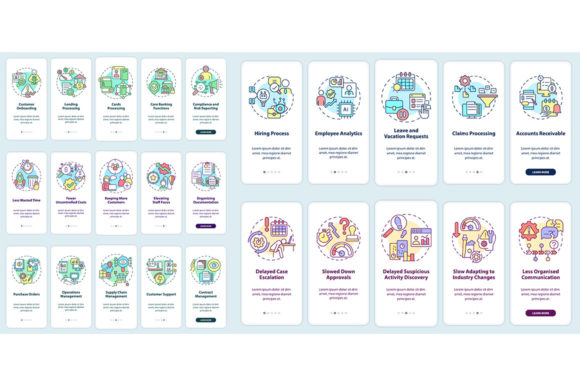
What makes this approach distinct is its focus on linear, guided workflows within the application interface. Rather than offering a dashboard with disparate functions, a well-designed Business Process and Banking Mobile App often employs a step-by-step, graphic instruction model. This transforms complex multi-step operations, like onboarding a new client for automated payments, into a clear, sequential task list within the app. The distinction lies in the orchestration of business logic and financial action into a single, cohesive user journey.
Comparing Approaches to Financial Process Automation
When evaluating options for automating financial tasks, several paths exist. One alternative is using separate, siloed tools: a business process management (BPM) software for workflows and a standalone banking app for transactions. This requires manual bridging between systems, often leading to data duplication, error potential, and delays. Another common approach is relying on desktop or web-based enterprise software suites, which offer robust features but lack the mobility and immediacy required for managers or approvers who are frequently off-site.
Business Process and Banking Mobile Apps sit in contrast to these by offering integrated mobility. The tradeoff here often involves depth versus immediacy. A comprehensive desktop BPM system might handle more complex, multi-departmental processes, whereas a mobile-integrated app excels at streamlining specific, high-frequency tasks that require quick approval and execution from anywhere. For instance, a purchasing manager approving a time-sensitive payment while at a supplier meeting can complete the entire process—from reviewing the PO to authorizing the bank transfer—in one fluid mobile session.
Design Foundations: UI, UX, and the Linear Walkthrough
The user experience (UX) of these apps is critically tied to their effectiveness. A successful interface leverages a clean GUI template with clear typography, such as the use of Myriad Pro-Bold for headings and Regular for instructions, to establish hierarchy and clarity. The walkthrough steps, presented as graphic instruction pages, are not merely decorative; they serve as a cognitive guide, reducing user anxiety around financial tasks and ensuring procedural compliance.
This linear concept design differs significantly from exploratory or dashboard-centric app models. It assumes a defined start and end point for a process, making it ideal for standardized operations like employee onboarding for payroll, client account setup, or recurring bill payment automation. The strength is predictability and reduced training time. The limitation is that it may be less adaptable for unstructured, ad-hoc financial tasks that require user navigation and exploration. Therefore, its best-fit situation is for organizations with clearly documented and repeatable financial workflows.
Evaluating Assets and Implementation Resources
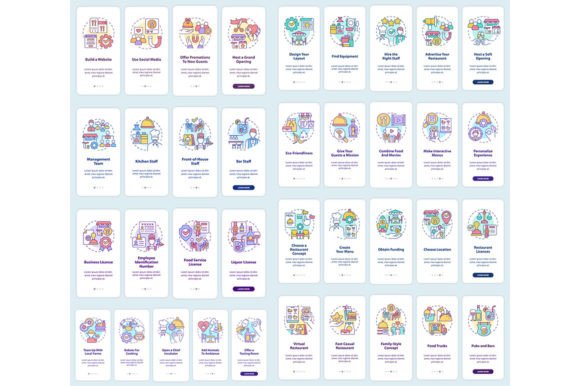
For teams looking to develop or customize such an application, the availability of design resources is a practical consideration. Collections that offer mobile app screen page templates, icons, and brochure infographic templates in versatile file formats like EPS, SVG, PNG, JPEG, and AI can significantly accelerate prototyping and development. These assets allow designers to maintain visual consistency across the graphic instruction pages, ensuring that icons and interface elements align with the professional tone required for financial applications.
Using a pre-designed UI kit versus building from scratch presents a common decision factor. The tradeoff involves time, cost, and uniqueness. A template-based approach, utilizing a coherent set of mobile app screens, can get a functional prototype to stakeholders quickly for validation. However, it may require customization to fit unique business processes perfectly. A bespoke design offers total alignment with specific workflows but demands greater investment. For many businesses, starting with a robust template set and adapting it is a balanced, practical path.
When Is This Integrated Mobile Approach the Right Choice?
The decision to pursue a Business Process and Banking Mobile App solution hinges on several factors. Firstly, consider the mobility of your decision-makers. If approvals and financial initiations are often required from personnel outside the office, a mobile-centric solution is compelling. Secondly, analyze the linearity of your key processes. If tasks like vendor onboarding or expense claim settlement follow a strict, unchanging sequence, this model fits well.
It may be less ideal for organizations where financial processes are highly variable, complex, and involve numerous exceptions that require case-by-case judgment supported by deep data analysis. In those scenarios, a more flexible, desktop-centric platform with advanced reporting might be necessary. Furthermore, the integrated app’s success depends on the underlying banking partnerships and API connectivity; not all business banking services offer the deep integration required to make the workflow truly seamless.
Strengths and Real-World Application Scenarios
A primary strength of this approach is the reduction of process friction. A realistic example is a small business automating its contractor payments. The process within the app could be: Step 1: Select contractor from approved list (graphic icon of a person). Step 2: Input invoice amount and details (form screen with Myriad Pro-Regular labels). Step 3: Review and approve (screen with bold confirmation headers). Step 4: Execute payment via integrated banking (final graphic instruction showing successful transfer). This eliminates email chains, separate login to the bank, and manual entry.
Another strength is consistency and compliance. The guided walkthrough ensures every user follows the same steps with the same checks, which is vital for audit trails and financial control. Compared to a scenario where staff use their own methods to complete a banking task, this standardized interface mitigates risk.
Navigating Alternatives and Making an Informed Decision
Readers exploring this topic should weigh it against the continuum of automation tools. On one end, there are manual methods and basic banking apps; on the other, full-scale enterprise resource planning (ERP) systems with mobile modules. Business Process and Banking Mobile Apps often occupy a valuable middle ground: more structured and integrated than basic tools, yet more agile and task-specific than an ERP.
Key decision factors include: the complexity and variability of your core financial processes, the need for mobility versus depth of features, the technical capability for integration with your bank, and the importance of user experience for your team’s adoption rate. If your needs lean towards streamlining specific, high-volume tasks with a dispersed team, this focused mobile app approach warrants serious consideration. If your processes are the backbone of your entire operation, deeply interconnected with inventory, sales, and accounting, a broader system might be a better foundational choice, perhaps with mobile features added later.
Ultimately, the evolution of resources in this space, including new template topics and asset collections offered weekly by studios like BSD Studio, provides a pathway for continuous improvement. Subscribing to such updates can help teams stay informed about evolving design patterns and functional possibilities, ensuring that their chosen solution can adapt over time. By understanding the distinct role, practical tradeoffs, and ideal use cases for Business Process and Banking Mobile Apps, professionals can make a more informed, strategic decision for their organization’s financial operation efficiency.