Identity Management Brochure Templates: A Review of Utility and Design
When communicating complex topics like user access security, the materials you use can either clarify or confuse. Identity Management Brochure Templates represent a specialized resource aimed at professionals who need to present these concepts effectively. This set is not merely a collection of graphics; it's a structured toolkit for creating coherent, visually consistent documents that explain access control, security protocols, and identity frameworks.
What These Templates Offer in Practical Terms
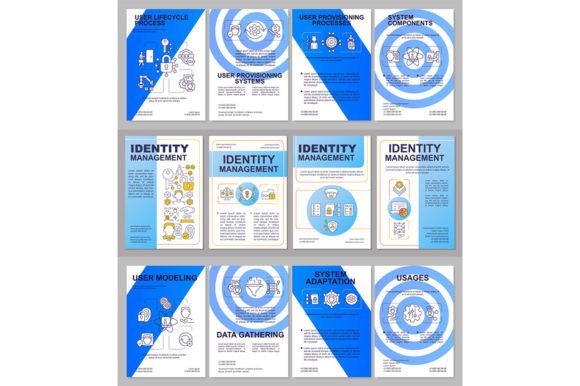
The core of this product is a set of three editable brochure templates, packaged within a zip file. Each template is designed with a focus on identity management, utilizing a leaflet design that incorporates linear icons. The provided file formats—EPS, JPEG, AI on a white background, and SVG, PNG on a transparent background—cover a broad range of professional applications. This means you can adapt the materials for both print-ready PDFs (using the EPS/AI files) and digital presentations or web content (using the SVG/PNG files) without losing quality or requiring extensive conversion work.
The use of Arial and Myriad Pro-Regular fonts is a deliberate choice. These are widely available, clean, and legible typefaces, ensuring that if you need to edit text, you likely have the fonts installed, or can easily substitute others without drastically altering the layout’s balance. This reduces a common friction point in using template sets.
Evaluating Key Characteristics and Usability
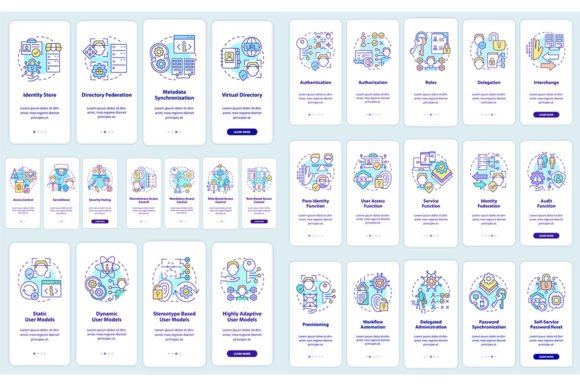
A primary strength of these identity management brochure templates is their focus on a niche subject. Generic brochure templates often require you to source or create relevant icons and graphics yourself. Here, the included linear icons are presumably tailored to themes like authentication, digital keys, user profiles, and security layers. This alignment between design elements and topic matter saves significant time and reinforces the message visually.
The four editable vector layouts mentioned for presentation and annual report use indicate flexibility. Vector formats (EPS, AI, SVG) allow for infinite scaling without resolution loss, crucial for large format prints or detailed digital displays. The ability to adapt these layouts for different purposes—from a quick handout to a comprehensive annual report section—speaks to the template set's modular design. You aren't locked into a single output; you can repurpose components.
Considering Quality and Consistency
For professionals who manage brand or project consistency, these templates provide a foundational style guide. The consistent use of icon style, font pairings, and presumably a coordinated color palette across all three brochures means that creating a series of documents—for a campaign, a training program, or a client proposal—will yield a unified look. This reliability is often undervalued but is critical for establishing authority and clarity in technical communications.
However, the utility hinges on the actual design execution. The description suggests a clean, modern leaflet design with linear icons, which typically conveys professionalism and simplicity. This style is effective for technical audiences who may prioritize information over decorative flair. The "white background" and "transparent background" options cater to different mediums: white for standard print, transparent for overlays on colored digital backgrounds.
Who Stands to Benefit Most from This Resource?
The audience for these identity management brochure templates is specific but varied. IT security consultants, system integrators, and in-house communications teams at tech firms are direct beneficiaries. When they need to explain access control systems to non-technical stakeholders, clients, or new employees, a well-designed brochure can be a powerful tool. Similarly, educators and trainers in cybersecurity or network administration can use these as visual aids in course materials.
Freelancers and small business owners offering security-related services, who may lack dedicated design resources, can leverage these templates to produce client-facing materials that look polished and credible. The included formats allow a graphic designer to make quick edits, or a moderately skilled person using software like Adobe Illustrator or even free vector tools to adjust text and colors.
A potential limitation is the requirement for vector editing software to fully utilize the AI, EPS, or SVG files. Users only comfortable with basic image editors might find the JPEG and PNG versions less editable for text changes. Therefore, the ideal user has access to, or basic proficiency with, vector graphic applications.
Long-Term Value and Integration into Workflow
The long-term value of this identity management brochure template set lies in its reusability and adaptability. Security concepts evolve, but foundational themes like user identity, access gates, and verification remain. The linear icon set could be reused in other projects—perhaps for website elements or simple infographics. The four vector layouts for presentations and reports provide a framework that can be used repeatedly for different annual cycles or client presentations, ensuring consistent visual language over time.
Integrating these into a workflow is straightforward for those with established design processes. For teams, the zip file structure allows easy archiving and asset management. The promise from BSD Studio of "new topics and discounts every week" and the call to subscribe suggests that acquiring this set could be part of accessing a broader library of professional infographic templates, mobile app screen pages, and more. For a regular content creator in the tech space, this ongoing resource stream adds ancillary value.
Professional Observations on Effectiveness
From a practical standpoint, the effectiveness of these templates will be judged on their ability to communicate clearly and reduce production time. A good template should halve the time it takes to create a professional document. Given the subject-specific icons and layouts, this set likely achieves that for its target niche. Their effectiveness in presentation hinges on the user’s content: the templates provide the vessel, but the user must fill it with clear, well-structured information about identity management protocols.
For real-world performance, one might use these to create a brochure for a new multi-factor authentication rollout. The linear icons could visually represent steps in the login process, while the clean layout organizes benefits and instructions. The resulting document would likely appear more authoritative and easier to digest than a plain text memo or a hastily assembled slide deck.
Ultimately, the Identity Management Brochure Templates are a focused tool. They are not a generic graphic pack. Their worth is directly tied to your need to communicate topics within user access security and digital identity. If your projects, clients, or audience regularly engage with these concepts, this template set offers a significant shortcut to polished, thematic, and adaptable visual communication.