Beyond Chess and Charts: The Art of Strategic Positioning
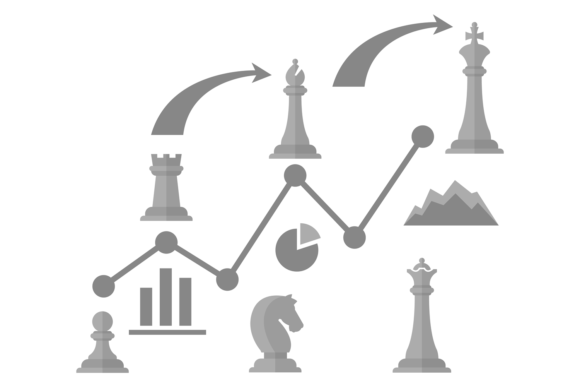
The imagery of a chess piece alongside a data chart isn't just a graphic; it's a powerful conceptual shorthand. This visual pairing of a Strategy Concept. Chess Figure and Chart represents the fusion of structured analytical thinking with decisive, forward-looking action. For professionals navigating complex environments, this combination serves as a mental model for excellence. It reminds us that robust strategy requires both the granular insight of data and the high-level, competitive maneuver of a master player.
At its core, this concept is about integration. The chart symbolizes the measurable, the quantifiable, the terrain of facts and trends we must survey. The chess figure, often a king, queen, or knight, symbolizes agency, intent, and the execution of a plan within a dynamic system with competing forces. Separately, they are tools. Combined, they become a philosophy for tackling challenges where information alone is insufficient without intelligent application.
The Anatomy of a Dual-Mindset Approach
What makes the Strategy Concept. Chess Figure and Chart so potent are the inherent qualities each element brings to the partnership. The chart demands objectivity, clarity, and a grounding in reality. It asks, "What is true?" The chess figure introduces concepts of sacrifice, tempo, positioning, and long-term advantage. It asks, "What move creates the best future?"
A key characteristic is contextual adaptability. In a financial setting, the chart might be a profit & loss statement, and the chess figure represents a bold market entry or a defensive asset repositioning. In a marketing campaign, the chart is audience engagement data, and the chess piece is the creative, viral "move" that captures attention. This adaptability makes the concept universally relevant across domains that involve both analysis and competition.
Another notable strength is its emphasis on resource allocation. Chess is fundamentally about using limited pieces efficiently on a 64-square board. Similarly, every professional environment has limited resources: time, budget, personnel. The chart helps identify where resources are currently deployed and their effectiveness, while the chess mindset forces strategic questions about whether those resources are positioned for maximum impact.
Real-World Arenas for Application
The practical applications of this integrated mindset are vast. Let’s move beyond metaphor and into concrete environments.
For entrepreneurs and business owners, launching a product is a perfect case. Market research charts (size, growth, demographics) provide the landscape. The chess move is deciding your unique value proposition and initial market entry—do you attack a niche directly (like a pawn's advance), or position yourself for broader control later (like a knight's development)? Every business decision, from pricing to partnership, can be viewed through this lens of data-informed positioning.
In educational and creative fields, the concept shifts. An educator might use assessment data charts to understand student performance gaps. The chess figure represents the instructional strategy—perhaps sacrificing breadth for depth on a key topic to solidify understanding, or "forking" two learning objectives with a single project. For a content creator, analytics charts show viewer drop-off points; the strategic "move" is restructuring content flow or introducing an engaging element at that precise moment to hold attention.
For project managers and team leaders, Gantt charts or sprint burndown charts provide the factual timeline. The chess thinking involves anticipating bottlenecks (like anticipating an opponent's threat), proactively reallocating team members (like redeploying a piece), and sometimes making the hard choice to de-prioritize a feature to protect the overall project launch date—a classic strategic sacrifice.
Tangible Benefits of a Combined View
Adopting this dual-focus approach yields clear benefits. The first is improved decision confidence. Decisions feel less like guesses when they are supported by data but framed within a coherent tactical plan. It reduces the paralysis that can come from over-analysis; the data informs, but the strategic imperative dictates action.
Communication and alignment within teams also benefit. Using the Strategy Concept. Chess Figure and Chart as a framework in meetings can make complex strategies more digestible. "Here's the performance chart of our main competitor. Our 'queen move' this quarter is to outmaneuver them here, not by matching their spend, but by securing this exclusive partnership." It creates a narrative that binds data to intent, enhancing team engagement with the plan.
From a branding and user experience perspective, this concept encourages holistic design. User interaction charts (heatmaps, conversion paths) reveal behavior. The strategic "move" is then the intentional redesign of a key page element or the placement of a call-to-action, not based on whim, but as a calculated intervention to guide the user towards a desired outcome, much like guiding a game towards checkmate.
Implementing the Concept: Practical Considerations
How do you actually apply this? It begins with a conscious split in your planning process. First, dedicate time to chart the territory. Gather and visualize the relevant data without jumping to solutions. Ask: What are the trends? Where are the strengths and weaknesses? What is static, and what is changing?
Then, shift mentally to the chessboard. With the terrain mapped, ask chess-inspired questions: What is my primary objective (the equivalent of checkmate)? What are my key resources (pieces)? What are the apparent threats and opportunities (opponent's position)? What move, available to me now, creates the greatest positional advantage for future moves?
A critical consideration is avoiding over-simplification. Real-world strategy isn't a turn-based game on a simple grid. The "opponent" might be market volatility, technological change, or internal inertia. The concept is a guide, not a rigid formula. Furthermore, ensure your "charts" are trustworthy. Poor data leads to poor strategic foundations, no matter how clever the subsequent move seems.
Finally, remember that in chess, grandmasters think multiple moves ahead while responding to the present board. Your strategy should have the same fluid hierarchy: a long-term goal (your endgame), supported by mid-term initiatives (your piece development), executed through precise, data-responsive short-term actions (your individual moves). The Strategy Concept. Chess Figure and Chart beautifully encapsulates this need to hold both the immediate fact and the future ambition in mind simultaneously.
In essence, this visual concept is more than a graphic asset for a presentation. It is a reminder that in any competitive or complex arena—whether business, creative projects, or personal career development—success lies not in choosing between analysis and action, but in mastering their union. It champions the mindset of the strategist who, with one eye on the dashboard and the other on the horizon, makes the move that matters.